<?xml version="1.0" encoding="utf-8"?><feed xmlns="http://www.w3.org/2005/Atom" ><generator uri="https://jekyllrb.com/" version="3.10.0">Jekyll</generator><link href="https://maffiemd.github.io/balls-and-strikes/feed.xml" rel="self" type="application/atom+xml" /><link href="https://maffiemd.github.io/balls-and-strikes/" rel="alternate" type="text/html" /><updated>2026-09-29T16:24:21+00:00</updated><id>https://maffiemd.github.io/balls-and-strikes/feed.xml</id><title type="html">Balls and Strikes</title><subtitle>A newsletter about collective bargaining, contract negotiations, and arbitration in professional sports.</subtitle><entry><title type="html">Could an NFL Team Prove a Player Is Faking Back Pain?</title><link href="https://maffiemd.github.io/balls-and-strikes/2026/09/29/back-pain/" rel="alternate" type="text/html" title="Could an NFL Team Prove a Player Is Faking Back Pain?" /><published>2026-09-29T00:00:00+00:00</published><updated>2026-09-29T00:00:00+00:00</updated><id>https://maffiemd.github.io/balls-and-strikes/2026/09/29/back-pain</id><content type="html" xml:base="https://maffiemd.github.io/balls-and-strikes/2026/09/29/back-pain/"><![CDATA[<figure class="post-image">
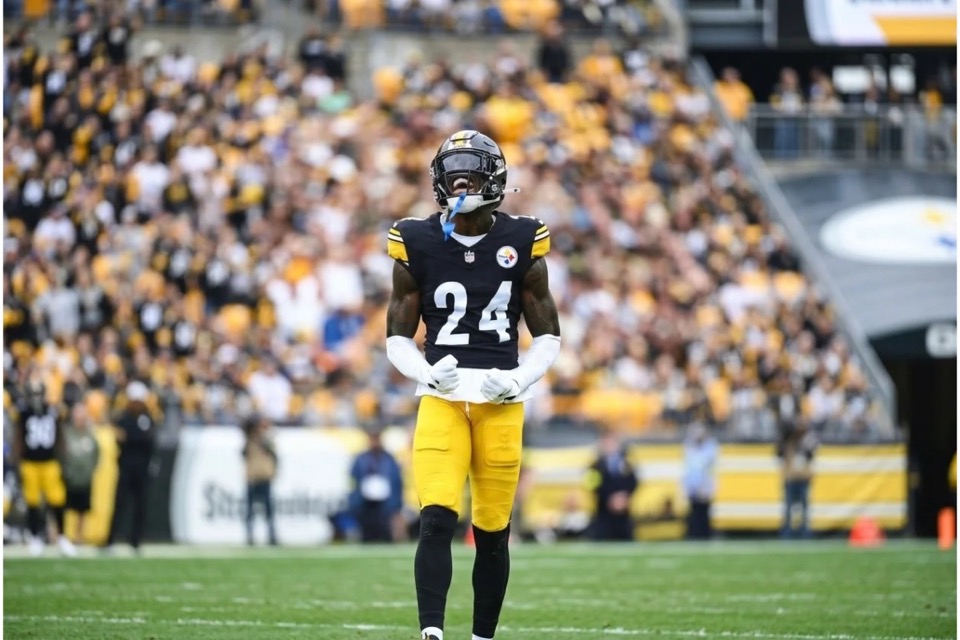
  <img src="/balls-and-strikes/assets/images/porterjr.jpg" alt="Joey Porter Jr." style="max-width:100%;height:auto;display:block;" />
  <figcaption>An image of Joey Porter Jr. from IBTimes/Instagram.</figcaption>
</figure>

<p>The labor dispute developing between Joey Porter Jr. and the Pittsburgh Steelers raises an important new question for the NFL’s collective bargaining agreement, and could create significant conflict between the NFLPA and the NFL in the next round of collective bargaining.</p>

<p>In 2026, Pittsburgh Steelers cornerback Joey Porter Jr. entered training camp without a new contract. On the first day of training camp, he reported aggravating a back injury and left practice. He has yet to play in a game for the Pittsburgh Steelers this year. He was first listed as medically unable to play due to back pain, and the team’s injury report has since added a conditioning designation.</p>

<p>Before getting into the dispute, it is important to say upfront that football is a dangerous and physically demanding game. Pain is common for players, and developing long-running injuries is not uncommon. Porter Jr. may very well be experiencing ongoing back pain due to the nature of his work.</p>

<p>Yet <a href="https://sports.yahoo.com/articles/three-rivers-report-did-steelers-173656333.html">some fans and commentators</a> have questioned the truthfulness of Porter Jr.’s claims about back pain.</p>

<p>That skepticism is grounded in changes to the NFL’s most recent collective bargaining agreement, signed in 2020, which <a href="https://maffiemd.github.io/balls-and-strikes/2026/09/06/gonzalez-porter-jr-cba-gap/">increased penalties</a> for players who, in seeking a new contract, refuse to practice or play. The new penalties – greater fines and docking players’ service time – are especially important for Porter Jr. because they could prevent him from qualifying for unrestricted free agency.</p>

<p>Due to these increased penalties, a player seeking a new contract can no longer simply hold out for a new deal without incurring significant repercussions. In July 2023, J.C. Tretter, then-President of the NFL Players’ Association (NFLPA), made comments that the NFL alleged encouraged players to gain leverage in contract negotiations by <a href="https://www.espn.com/nfl/story/_/id/38434851/nfl-files-grievance-claims-nflpa-advised-rbs-exaggerate-injuries">exaggerating their injuries</a>. The NFL <a href="https://www.espn.com/nfl/story/_/id/45763049/arbiter-ruled-nfl-grievance-vs-nflpa-rb-advice">filed and won</a> a grievance against the NFLPA, and an arbitrator found that such statements violated the NFL’s CBA. That grievance targeted the union, not a player. To my knowledge, there has been no grievance between the NFL and an individual player regarding faux or exaggerated injuries.</p>

<p>If the team were to challenge whether Porter Jr. was faking or exaggerating an injury to gain leverage in his contract negotiation, could it succeed? This issue goes beyond Porter Jr. and his team: if teams cannot effectively challenge an injury claim, other players seeking leverage may follow the same path. There is a significant medical literature on pain – and specifically back pain – that speaks to if medical providers can verify the existence and intensity of pain.</p>

<h2 id="detecting-back-pain">Detecting Back Pain</h2>

<p>The key question in the dispute between Porter Jr. and the Steelers would be whether he is medically capable of playing professional football. I am not a medical doctor, and can only speak to my understanding of the existing literature on pain and employment disability. This is not a small area because many employment disputes around disability and Workers’ Compensation concern pain, and back pain in particular.</p>

<p>A major problem, as <a href="https://digitalcommons.law.umaryland.edu/fac_pubs/1550/">Pustilnik (2015)</a>, a professor of law at the University of Maryland School of Law and faculty at the Center for Law, Brain &amp; Behavior at Massachusetts General Hospital, writes, is that pain is invisible:</p>

<blockquote>
  <p>Courts struggle with questions relating to the reality and verifiability of
chronic pain and appear to struggle in particular with the invisibility of
pain. Pain’s invisibility is its famous problem: As the seminal scholar on
pain, Elaine Scarry, explained, pain “may seem to have … no reality
because it has not yet manifested itself on the visible surface of the earth.”…
Adjudicators may reject well-substantiated claims where the claimant does
not offer visual medical evidence like X-rays or MRIs, even though such
technologies are often irrelevant to pain diagnosis.</p>
</blockquote>

<p>Pustilnik is restating a well-known problem in the pain literature: it is largely invisible to modern medicine. More specifically, pain has no <em>biomarker</em>, meaning that there are no biological tests that can confirm its presence or absence, nor can biological tests reveal pain intensity. Compounding this problem is that chronic pain can endure even after the primary injury is healed:</p>

<blockquote>
  <p>Rather, chronic pain often has “a life of its own”:
it often does not depend on continued peripheral input. It may endure long
after any injury has healed, may be entirely out of proportion to the original
(sometimes trivial) injury, or may arise in the absence of any injury. (Pustilnik 2015)</p>
</blockquote>

<p>The absence of reliable biomarkers for chronic pain creates challenges in administering Workers’ Compensation and Social Security Disability benefits:</p>

<blockquote>
  <p>Validation of these chronic symptoms is often contentious because no objective biomarker or physical sign can reliably confirm their presence or severity. The concept of illness without measurable parameters challenges clinicians and conflicts with legal systems that rely heavily on objective evidence in adjudicating health-related questions. <a href="https://www.cambridge.org/core/services/aop-cambridge-core/content/view/99F72F2831938E0AF02AA304FC46C759/S1073110526102617a.pdf/div-class-title-beyond-the-benefit-of-doubt-biases-and-credibility-in-the-adjudication-of-chronic-pain-div.pdf">(Assis et al. 2026)</a></p>
</blockquote>

<p>Absent direct biomarkers to rely on, the medical community and legal field have developed general practices to behaviorally evaluate the existence and severity of pain. All of them look for consistency rather than measuring pain directly:</p>

<ol>
  <li>Functional Capacity Evaluation (FCE). For this test, the patient performs standardized tasks (lifting, bending, etc.), and the evaluator looks for inconsistent performance across tasks and repeated movements.</li>
  <li>Observation. The medical provider watches the patient throughout the visit, including walking to the exam room, getting on and off the exam table, and dressing and undressing.</li>
  <li>History-taking. The provider asks about treatment, medical history, and how symptoms have changed over time. Questions may be repeated or asked out of order, which makes it more difficult for someone exaggerating or feigning an injury to answer consistently.</li>
  <li>Distraction tests. The provider checks whether symptoms stay consistent when the patient’s attention is directed elsewhere, such as when performing an unrelated movement or answering an unrelated request. These tests are not highly reliable.</li>
  <li>Symptom validity tests. These questionnaires and scales compare a patient’s response pattern against patterns typical of genuine versus feigned or exaggerated symptoms.</li>
  <li>Outside observation. Separate from the medical exam itself, an employer can obtain access to a person’s social media posts or hire investigators to observe the claimant away from the workplace and medical exam.</li>
</ol>

<p>Yet these methods face challenges. A 2026 review of FCEs by <a href="https://doi.org/10.3389/fresc.2026.1777330">Schwab et al.</a> reports that evaluators find it difficult to distinguish submaximal effort from genuine, person-specific functional limitations. They also note that the field lacks a gold standard and consistent agreement between raters, making FCE reports vulnerable to cross-examination. Further, evaluators’ own judgments about effort are only moderately reliable. <a href="https://pmc.ncbi.nlm.nih.gov/articles/PMC4000417/">Trippolini et al.</a> had clinicians rate physical effort during FCEs and found only modest agreement across clinicians. For an arbitrator, this means that conflicting reports about a patient’s health are not only possible but probable.</p>

<h2 id="arbitration-and-porter-jr">Arbitration and Porter Jr.</h2>

<p>Should the team file a grievance against Porter Jr. regarding the validity and seriousness of his injury, the team would likely request a neutral medical evaluation of his injury. Given the lack of medically determinative evidence, I expect the neutral medical provider – the same role used in the <a href="https://maffiemd.github.io/balls-and-strikes/2026/09/06/gonzalez-porter-jr-cba-gap/">injury grievance process</a> under Article 44 – to be unlikely to give a recommendation to the arbitrator. Instead, their report is likely to list the tests administered and whether the player’s results were consistent with genuine pain (i.e., whether the tests turned up signs of feigning or exaggeration). This will leave a fair amount of uncertainty for both parties.</p>

<p>There is also an uncomfortable friction between these medical tests and their context: the tests used in evaluating back pain were developed with the general public in mind, and it is unclear how that would affect an arbitrator’s judgment. Professional athletes are far fitter than the general public, so a score that looks normal for an ordinary patient could still signal a real impairment for a player. At the same time, playing through pain is a routine part of the job in the NFL, so struggling with some of these tests may say little about whether a player can actually play. Which consideration should carry more weight?</p>

<p>Underlying all of this is the same problem the medical literature returns to: pain’s invisibility means neither side is likely to have anything close to a decisive piece of evidence to point to. That is not just a problem for the NFL, but one that many cases about Workers’ Compensation, Social Security Disability, and the Americans with Disabilities Act encounter every day. This invisibility is why I believe both parties would like to avoid a grievance, although it may become unavoidable in the coming weeks. And while this issue only concerns one team and its young cornerback, its outcome could have important implications for both the future of free agency in the NFL and its next collective bargaining agreement.</p>]]></content><author><name></name></author><summary type="html"><![CDATA[An image of Joey Porter Jr. from IBTimes/Instagram. The labor dispute developing between Joey Porter Jr. and the Pittsburgh Steelers raises an important new question for the NFL’s collective bargaining agreement, and could create significant conflict between the NFLPA and the NFL in the next round of collective bargaining.]]></summary><media:thumbnail xmlns:media="http://search.yahoo.com/mrss/" url="https://maffiemd.github.io/balls-and-strikes/assets/images/porterjr.jpg" /><media:content medium="image" url="https://maffiemd.github.io/balls-and-strikes/assets/images/porterjr.jpg" xmlns:media="http://search.yahoo.com/mrss/" /></entry><entry><title type="html">Gonzalez, Porter Jr., and a Gap in the NFL’s CBA</title><link href="https://maffiemd.github.io/balls-and-strikes/2026/09/06/gonzalez-porter-jr-cba-gap/" rel="alternate" type="text/html" title="Gonzalez, Porter Jr., and a Gap in the NFL’s CBA" /><published>2026-09-06T00:00:00+00:00</published><updated>2026-09-06T00:00:00+00:00</updated><id>https://maffiemd.github.io/balls-and-strikes/2026/09/06/gonzalez-porter-jr-cba-gap</id><content type="html" xml:base="https://maffiemd.github.io/balls-and-strikes/2026/09/06/gonzalez-porter-jr-cba-gap/"><![CDATA[<figure class="post-image">
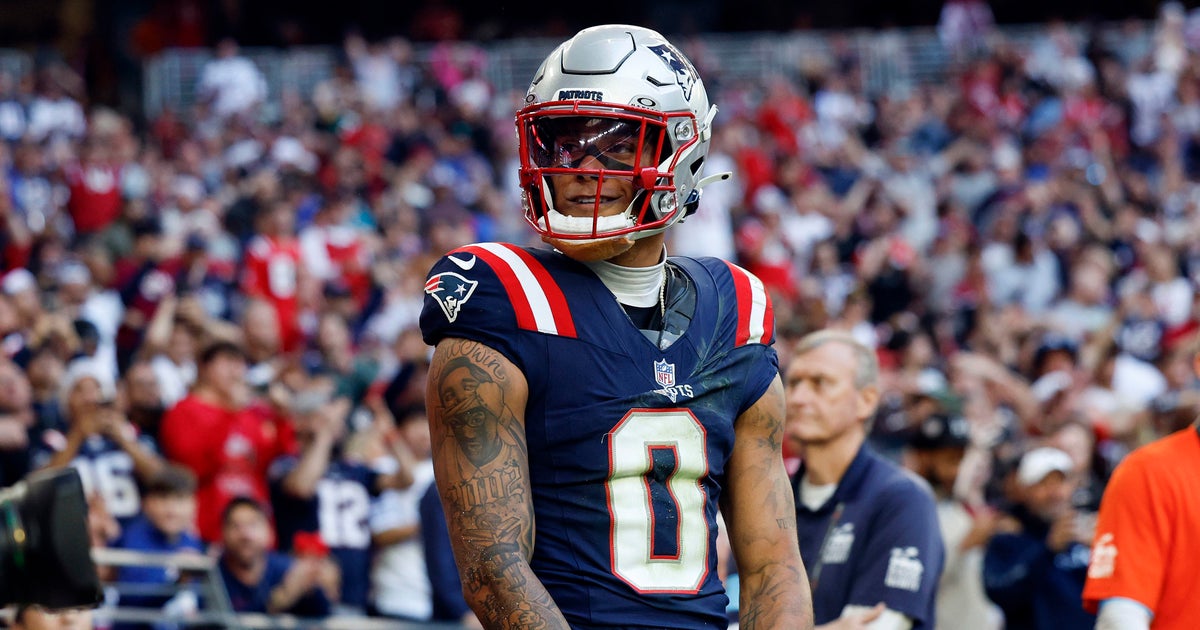
  <img src="/balls-and-strikes/assets/images/gonzalez.jpg" alt="Christian Gonzalez" style="max-width:100%;height:auto;display:block;" />
  <figcaption>An image of Christian Gonzalez from CBS Sports.</figcaption>
</figure>

<p>Two of the NFL’s premier young cornerbacks, Christian Gonzalez of the Patriots and Joey Porter Jr. of the Steelers signaled that they may <a href="https://www.nbcsports.com/nfl/profootballtalk/rumor-mill/news/christian-gonzalez-doesnt-commit-to-playing-season-opener">refuse to play</a> <a href="https://sports.yahoo.com/articles/joey-porter-jr-week-1-011345660.html">the 2026 season under their current contract</a>. This is the most significant player standoff since Chris Jones of the Chiefs <a href="https://www.nfl.com/news/chiefs-dt-chris-jones-opens-up-on-holdout-all-i-m-doing-is-asking-for-a-raise">refused to play week 1 of the 2023</a> season without a new deal. How does the collective bargaining agreement treat player refusal to participate?</p>

<h3 id="disputes-about-player-fitness">Disputes About Player Fitness</h3>
<p><a href="https://sports.yahoo.com/articles/patriots-injury-news-christian-gonzalez-164904865.html">Both</a> <a href="https://sports.yahoo.com/articles/steelers-receive-concerning-injury-updates-100543501.html">players</a> reported to training camp but claimed to sustain injuries that prevented them from fully participating. <a href="https://sports.yahoo.com/articles/three-rivers-report-did-steelers-173656333.html">Some outlets</a> were skeptical of the seriousness of their injuries, believing they were pretext to engage in a hold-in during training camp.</p>

<p>The problem for both sides is that faux-injuries fall into a hole in the CBA.</p>

<p>Disputes over injuries <em>after</em> a player’s contract has been terminated are covered in the NFL under <a href="https://overthecap.com/collective-bargaining-agreement/article/44">Article 44</a> of the CBA, “Injury Grievances”. Specifically, these disputes follow a three-step process:</p>
<ol>
  <li>The player is initially evaluated for the team physician to determine fitness to play.</li>
  <li>If the team and the player disagree about the conclusion of the team physician, the player is referred to a neutral medical provider jointly selected by the NFL and the NFLPA. That medical provider cannot have had previous interaction regarding the player’s case with either the team physician or the player’s physician.</li>
  <li>The neutral physician provides a report to a neutral arbiter, again jointly selected by the NFL and the NFLPA. The neutral arbiter considers the report and surrounding facts to make a final and binding determination about the player’s fitness to play.</li>
</ol>

<p>Any grievance between <em>current</em> players and clubs arises under <a href="https://overthecap.com/collective-bargaining-agreement/article/43">Article 43</a>, the standard NFL grievance procedure. From what I can tell, faux-injury grievances have yet to be handled under the NFL CBA, so such a claim would fall between the cracks of Article 43 (the general grievance procedure, not designed for injuries) and Article 44 (which only covers medical disputes <em>after</em> a player’s contract has been terminated).</p>

<p>That said, Article 44 provides a previously agreed upon framework for determining player fitness. Accordingly, it seems reasonable, although not guaranteed, that an arbitrator would ask for some version of that process (e.g., team evaluation, neutral evaluation) prior to making a decision.</p>

<h3 id="article-81b">Article 8(1)(b)</h3>
<p>The 2020 NFL CBA includes new penalties for players who refuse to participate under their current contracts. <a href="https://overthecap.com/collective-bargaining-agreement/article/8/section/1">Article 8(1)(b)</a> provides the most leverage to the Patriots and Steelers. The article states:</p>
<blockquote>
  <p><strong>A player shall not receive an Accrued Season</strong> <strong>for any League Year in which the player is under contract to a Club</strong> and in which (i) he failed to report to the Club’s preseason training camp on that player’s mandatory reporting date; or (ii) <strong>the player thereafter failed to perform his contract services for the Club for a material period of time</strong>, unless he demonstrates to the Impartial Arbitrator extreme personal hardship causing such failure to report or perform, such as severe illness or death in the family. The determination of the Impartial Arbitrator shall be made within thirty days of the application by the player, and shall be based upon all information relating to such hardship submitted by such date. The determination of the Impartial Arbitrator shall be final and binding upon all parties.</p>
</blockquote>

<p>Provision (ii) is the one that both Porter Jr. and Gonzalez will be most concerned about. Under this provision, should they be found to hold out for a “material period of time”, they would <em>not</em> receive an accrued season toward free agency. As a result, these players would only qualify for <em>restricted</em> free agency, not <em>unrestricted</em> free agency.</p>

<p>Teams have more options to retain restricted free agents compared to unrestricted ones. In the case of Porter Jr. and Gonzalez, their teams would most likely opt for a first-round tender, under which other clubs could negotiate with these players, but their respective teams would have the right of first refusal to match that contract. Alternatively, should the original team decline to match the negotiated contract, they would receive the acquiring team’s first round pick as compensation.</p>

<p>The value of a first round pick is roughly estimated at 3% of the salary cap, or about $10 million per season. Accordingly, should a team acquire either player for above $30M per season, surrendering their first round pick would push that total cost to above $40M per season.</p>

<h3 id="getting-to-kickoff">Getting to Kickoff</h3>
<p>Given their number of accrued seasons, a holdout that extends into the season is extremely risky for both players. At the moment, however, both players have every incentive to make their clubs believe they are willing to hold out – it is central to their leverage. Given the risks, it seems likely that both will find a way to save face and return to their clubs before Week 1.</p>]]></content><author><name></name></author><summary type="html"><![CDATA[An image of Christian Gonzalez from CBS Sports. Two of the NFL’s premier young cornerbacks, Christian Gonzalez of the Patriots and Joey Porter Jr. of the Steelers signaled that they may refuse to play the 2026 season under their current contract. This is the most significant player standoff since Chris Jones of the Chiefs refused to play week 1 of the 2023 season without a new deal. How does the collective bargaining agreement treat player refusal to participate?]]></summary><media:thumbnail xmlns:media="http://search.yahoo.com/mrss/" url="https://maffiemd.github.io/balls-and-strikes/assets/images/gonzalez.jpg" /><media:content medium="image" url="https://maffiemd.github.io/balls-and-strikes/assets/images/gonzalez.jpg" xmlns:media="http://search.yahoo.com/mrss/" /></entry><entry><title type="html">What if Joey Porter Jr. Refuses to Play Week 1?</title><link href="https://maffiemd.github.io/balls-and-strikes/2026/09/02/jpj-and-the-cba/" rel="alternate" type="text/html" title="What if Joey Porter Jr. Refuses to Play Week 1?" /><published>2026-09-02T00:00:00+00:00</published><updated>2026-09-02T00:00:00+00:00</updated><id>https://maffiemd.github.io/balls-and-strikes/2026/09/02/jpj-and-the-cba</id><content type="html" xml:base="https://maffiemd.github.io/balls-and-strikes/2026/09/02/jpj-and-the-cba/"><![CDATA[<p>With news that Steelers’s cornerback Joey Porter Jr. needs to check with the <a href="https://bsky.app/profile/bgnation1.bsky.social/post/3muia7qa2pk2j">“guys upstairs”</a> to see if he is playing week one, it raises the question: What does the collective bargaining agreement say about player refusal to participate during the season?</p>

<p>After Steelers’s running back Le’Veon Bell refused to sign his franchise tag tender in 2018, the NFL negotiated a new collective bargaining agreement. In the new agreement, there are much stiffer penalties for players who hold out in both training camp and the regular season. Specifically, <a href="https://overthecap.com/collective-bargaining-agreement/article/8/section/1">Article 8(1)(b)</a> states (bolding mine):</p>

<blockquote>
  <p><strong>A player shall not receive an Accrued Season for any League Year in which the player is under contract</strong> to a Club and in which (i) he failed to report to the Club’s preseason training camp on that player’s mandatory reporting date; or (ii) <strong>the player thereafter failed to perform his contract services for the Club for a material period of time</strong>, unless he demonstrates to the Impartial Arbitrator extreme personal hardship causing such failure to report or perform, such as severe illness or death in the family. The determination of the Impartial Arbitrator shall be made within thirty days of the application by the player, and shall be based upon all information relating to such hardship submitted by such date. The determination of the Impartial Arbitrator shall be final and binding upon all parties.</p>
</blockquote>

<p>Section (i), combined with new financial penalties for holdouts that teams cannot waive, has resulted in the infamous “hold-in”, where players report to camp but do not fully participate.</p>

<p>Section (ii) concerns accrual of service time. For a player to become an unrestricted free agent, they must accrue 4 years of service time in the NFL. Should Porter Jr. not accrue an additional year of service time during the 2026-2027 league year, he would only qualify for restricted free agent status. In that case, the Steelers could use a range of options to retain his service, most likely a “first-round tender”. In this case, if another team offers Porter Jr. a contract, the Steelers could either match that contract or choose to take the acquiring team’s first-round pick, whichever they prefer.</p>

<p>The difference between the first-round tender for a RFA and “franchise tag” for an unrestricted free agent is the price: a 2027 first round tender would come in somewhere around $8.5M, whereas the franchise tag would be somewhere around $23M. Further, if the Steelers retain Porter Jr. using a first-round tender next year, the Steelers could choose to franchise tag Porter Jr. in 2028-2029.</p>

<p>If Porter Jr. does not play, he would most likely claim that he was injured, not holding out. There are provisions in the collective bargaining agreement governing player health and fitness to perform. That’s a whole separate conversation.</p>

<p>Chris Jones held out into the season for a new deal, but he was already under contract and did not need to qualify for unrestricted free agency. Given Porter Jr.’s service time, he runs a serious risk of not qualifying for unrestricted free agency if he holds out into Week 1.</p>]]></content><author><name></name></author><summary type="html"><![CDATA[With news that Steelers’s cornerback Joey Porter Jr. needs to check with the “guys upstairs” to see if he is playing week one, it raises the question: What does the collective bargaining agreement say about player refusal to participate during the season?]]></summary></entry><entry><title type="html">Welcome to Balls and Strikes</title><link href="https://maffiemd.github.io/balls-and-strikes/2026/08/31/welcome-to-grievances-about-sports/" rel="alternate" type="text/html" title="Welcome to Balls and Strikes" /><published>2026-08-31T00:00:00+00:00</published><updated>2026-08-31T00:00:00+00:00</updated><id>https://maffiemd.github.io/balls-and-strikes/2026/08/31/welcome-to-grievances-about-sports</id><content type="html" xml:base="https://maffiemd.github.io/balls-and-strikes/2026/08/31/welcome-to-grievances-about-sports/"><![CDATA[<p>This is the first post on <strong>Balls and Strikes</strong> — a newsletter about collective bargaining and labor relations in professional sports.</p>

<p>Subscribe below to get new posts delivered straight to your inbox.</p>]]></content><author><name></name></author><summary type="html"><![CDATA[This is the first post on Balls and Strikes — a newsletter about collective bargaining and labor relations in professional sports.]]></summary></entry></feed>